
What is a detailed neurological examination and why is it done?
A detailed neurological examination is a systematic assessment by a neurologist of the function of the brain, spinal cord, peripheral nerves and muscles, based on a detailed medical history and special clinical tests. It is the foundation of a neurological diagnosis, and it is also what determines whether further tests are needed.
In neurology, the history of the illness is sometimes the most important source of information for making a diagnosis. That is why it is so important to examine and identify in good time the cranial nerves, movement disorders, the primary site of damage and the disease causing it. Detecting conditions such as Parkinson’s disease, Alzheimer’s disease and migraine at an early stage allows treatment to be started on time and quality of life to be preserved. Remember that a timely diagnosis makes the right treatment possible.
Who is it recommended for?
As with any illness, complications of neurological conditions can be dangerous. Even a headache we consider unimportant is sometimes a sign of a serious illness. The following symptoms are a reason to see a neurologist.
- Frequently recurring headaches, or headaches that have changed in character
- Dizziness, balance problems
- Seizures, recurrent episodes of loss of consciousness
- Weakness in the arms and legs
- Numbness or tingling in various parts of the body
- Tremor, tics, involuntary movements
- Weakening of memory and attention
- Sleep disorders
- Ringing in the ears, weakening of hearing, vision or sense of smell
- Lower back and neck pain spreading to the limbs
- Long-lasting fatigue and neurotic complaints
More about neurological symptoms: Symptoms of nervous system disorders. To find out which conditions a neurologist deals with: The difference between a neurologist and a neuropathologist.
Sudden weakness on one side, speech problems, facial drooping, a very severe headache or a seizure lasting longer than 5 minutes are not a reason to wait for a routine appointment — in such cases call 103 immediately.
How should I prepare for the examination?
- Briefly note when your symptoms started, how they have changed, and what makes them better or worse.
- Bring a list of all the medicines you take (including vitamins and herbal preparations).
- Bring previous test, MRI, CT, EEG and EMG results and discharge summaries.
- If you have had seizures or involuntary movements, show a phone video of them if possible.
- If you have memory complaints, come with a relative who knows you well.
- Wearing shoes and clothing that are easy to take off makes the examination easier.
How is the examination carried out?
- Medical history — the doctor asks in detail about your symptoms and their course, past illnesses, injuries, medicines, and whether there are neurological conditions in your family.
- Mental status and cognitive function — consciousness, orientation, memory, attention and language are assessed.
- Cranial nerves — visual fields, eye movements, pupil reactions, facial sensation and expression, hearing, swallowing and tongue movements are checked.
- Motor system — muscle strength, tone, muscle bulk and involuntary movements are assessed.
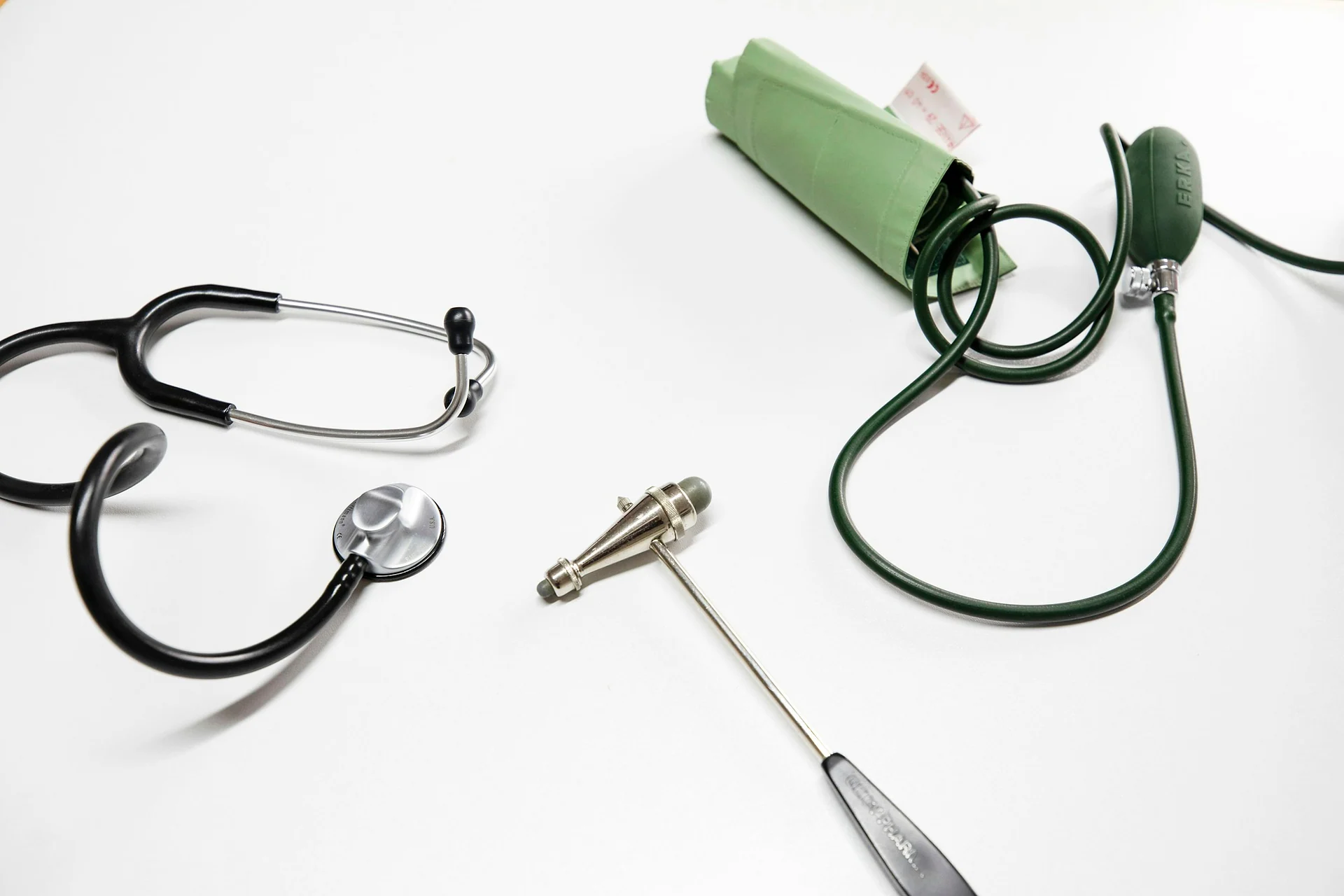
- Reflexes — tendon reflexes and pathological reflexes are checked with a reflex hammer.
- Sensation — touch, pain, temperature, vibration and joint position sense are assessed comparatively.
- Coordination and gait — the finger-nose test, balance tests and the character of walking are examined.
- Discussion of the results — the doctor explains the findings and discusses the likely diagnosis and next steps.
How long does it take, is it painful, are there any risks?
The length of the examination depends on the complexity of the symptoms. The examination is painless: when sensation is tested, only a light touch or a harmless pin-like test is felt. The examination carries no risk and can be carried out at any age.
How are the results interpreted and what happens next?
A neurological examination makes it possible to determine at which level of the nervous system the damage lies — in the brain, spinal cord, nerve root, peripheral nerve or muscle. This is called a “topical diagnosis” and is the basis for choosing further tests in a targeted way. Where necessary, the doctor may order an EEG, EMG, MRI or CT scan, blood tests, or consultations with other specialists. In some cases, however, the diagnosis is made by clinical examination alone and no further tests are needed. The treatment plan is drawn up individually for each patient on the basis of the examination and the results.
Frequently asked questions
If I already have an MRI, do I still need a neurological examination?
Yes. An MRI shows the structure of the brain and spine, but only a clinical examination can determine whether a change seen on the image is related to your symptoms.
Is a diagnosis made immediately after the examination?
In many cases the doctor gives an initial opinion during the examination itself. Sometimes the results of further tests are awaited to confirm the diagnosis.
Is the examination different for children and older people?
The principles of the examination are the same, but the tests are adapted to age and condition.