
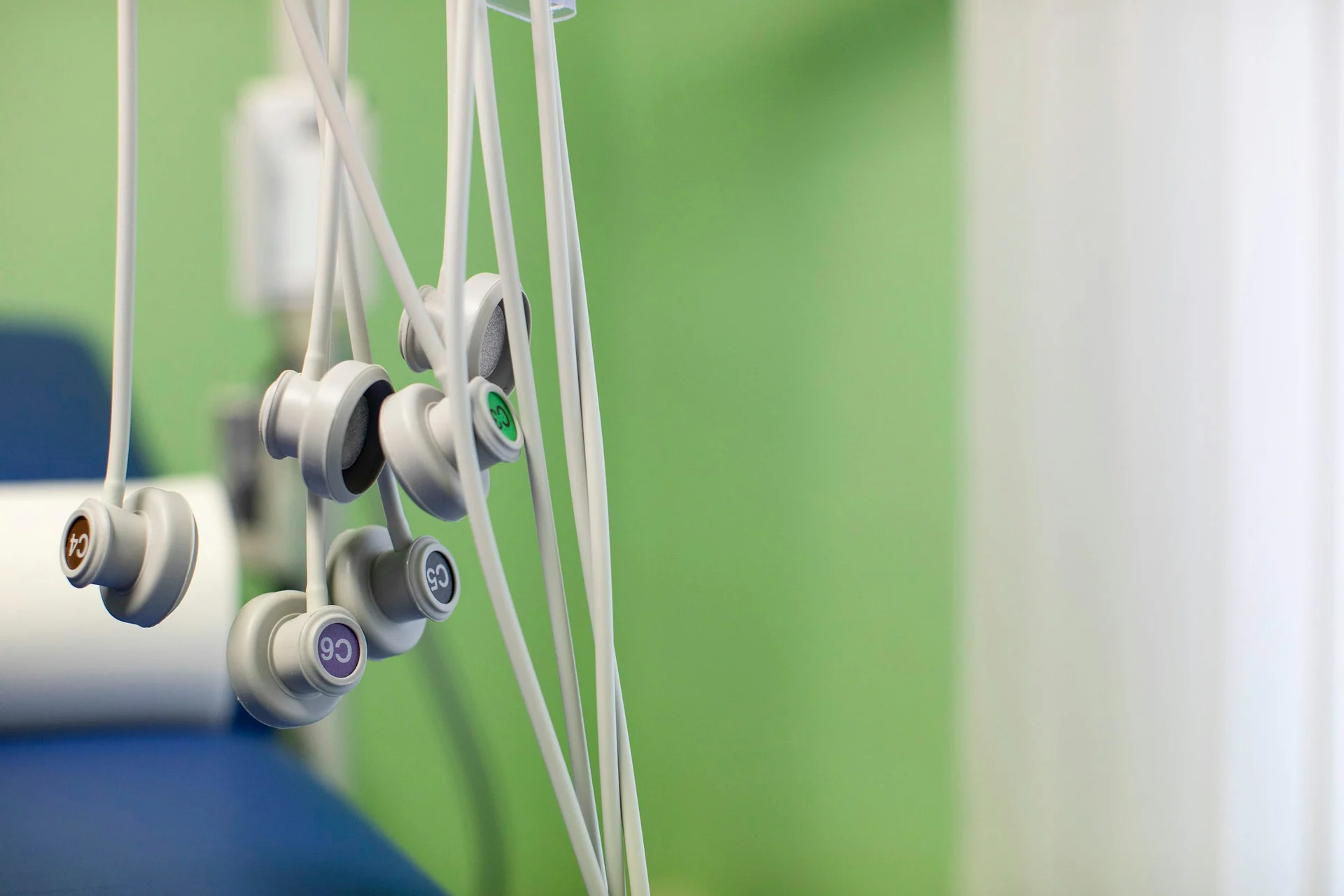
What is an EMG and why is it done?
Electromyography (EMG) is a diagnostic method that assesses the functional state of muscles and the peripheral nerves that control them by recording their bioelectrical activity. The test helps determine whether there is damage to muscles and peripheral nerves, where it is and how severe it is.
EMG is usually carried out together with a nerve conduction study (electroneurography), and this combination is often called electroneuromyography (ENMG). A device called an electromyograph records, amplifies and displays the biopotentials of muscles and nerves on a screen. The test makes it possible to tell whether the source of the problem lies in the muscle itself, a peripheral nerve, a nerve root or the junction between nerve and muscle.
Who is an EMG recommended for?
The doctor may order the test for the following symptoms and conditions.
- Numbness, tingling or burning in the hands and feet — read more: Numbness and pins and needles in the hands and feet
- Muscle weakness, muscle wasting, twitching
- Nerve entrapments such as carpal tunnel syndrome
- Suspected nerve root damage due to a lumbar or cervical disc herniation
- Polyneuropathy due to diabetes and other causes
- Assessing the extent of nerve damage after an injury
- Assessing the degree of damage and the prospects for recovery in facial nerve neuropathy
- Suspected muscle diseases (myopathies) and disorders of neuromuscular transmission
How should I prepare for an EMG?
- On the day of the test, do not apply cream, lotion or oil to your skin — they impair the contact between the electrodes and the skin.
- Wear comfortable clothing that makes it easy to uncover the area being examined.
- If you take blood-thinning medication or have a pacemaker or other implanted device, tell the doctor in advance.
- Cold limbs can affect the result, so keep your hands and feet warm in the winter months.
- Bring your previous test results (MRI, blood tests, earlier EMG).
How is an EMG carried out?
- Depending on the area being examined, the patient sits, lies down or reclines. The test can be carried out on an outpatient or inpatient basis.
- Nerve conduction study — surface electrodes are placed on the skin and the nerve is stimulated with a weak, brief electrical impulse. The speed at which the impulse travels along the nerve and the strength of the response are recorded. During stimulation there is a brief, pinching sensation and a twitch of the muscle.
- Needle EMG — when needed, the area is cleaned with an antiseptic and a thin, single-use needle electrode is inserted into the muscle. First the activity of the relaxed muscle is recorded, then the patient is asked to tense the muscle gradually and the impulses are recorded again.
- After the test, the patient can return to their normal activities.
Surface and needle EMG
- Global (surface) EMG is non-invasive and allows the overall activity of a large area of muscle to be assessed.
- Local (needle) EMG involves inserting a needle electrode through the skin into the muscle. This method allows the activity of individual muscles to be studied more precisely.
How long does it take, is it painful, are there any risks?
The duration of the test depends on the number of nerves and muscles examined and usually takes about half an hour to an hour. Electrical stimulation causes a brief, uncomfortable but tolerable sensation. When the needle electrode is used, the patient may feel mild pain; for a few days after the test there may be slight tenderness or a small bruise in that area. Serious complications (bleeding, infection) are very rare; sterile single-use needles are used.
How are EMG results interpreted?
The doctor assesses the conduction velocity of the nerve impulse, the amplitude of the response and the character of the activity in the resting and contracting muscle. On this basis it is determined whether the damage is in the nerve or the muscle, where it is located, how severe it is, whether it is acute or chronic, and whether there are signs of recovery. An EMG result is not a diagnosis on its own — only the doctor interprets it, together with the symptoms, the neurological examination and other tests. Immediately after an injury or acute nerve damage, EMG changes may not yet be fully visible, so the doctor determines the optimal timing of the test.
Frequently asked questions
Is an EMG very painful?
Most people tolerate the test easily. The stimulation and the needle cause mild, short-lived discomfort; you can tell the doctor how you feel at any time.
Can people with diabetes have an EMG?
Yes. In fact, assessing diabetic polyneuropathy is one of the most common uses of EMG.
Can an EMG be done during pregnancy?
The weak impulses used during the test have a local effect. Nevertheless, be sure to tell the doctor that you are pregnant — they will decide whether the test is necessary.