
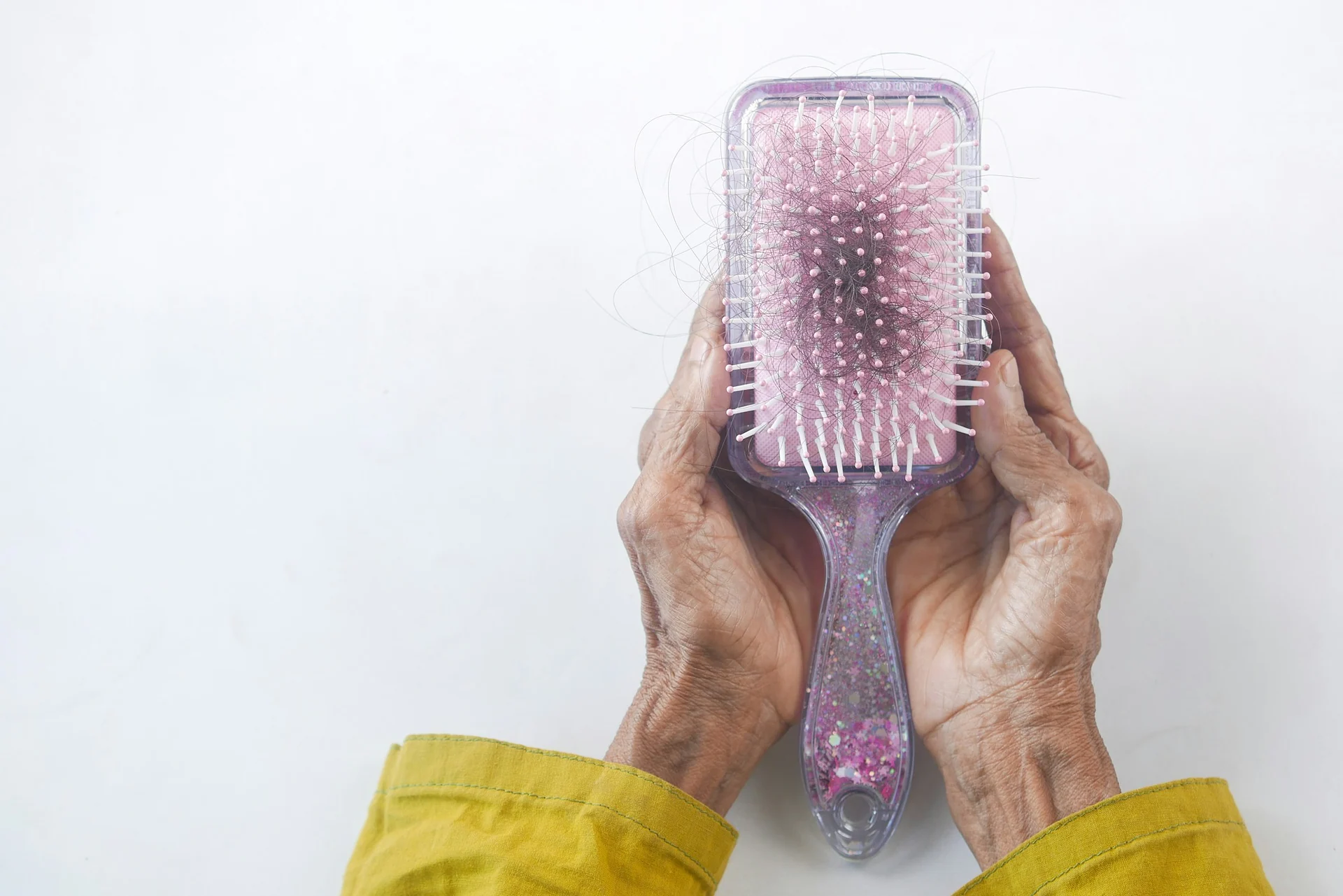
Although we tend to treat hair loss as normal, it can be a warning sign of a number of serious diseases.
Losing around 50–100 hairs a day is considered normal. In recent years, however, patchy hair loss has become widespread in men, women and children alike. In general, both exogenous and endogenous factors play a role in hair loss.
The main causes may include stress, neurological causes, a deficiency of a trace element or vitamin, anaemia, genetic factors, hormonal disorders, fatigue, working without rest and so on.
In some cases of patchy hair loss (alopecia areata), the body's immune system turns against the hair follicles. To investigate the cause of hair loss, an examination by a dermatologist (trichologist) is recommended first, with blood tests and an endocrinologist's consultation if necessary. A neurological examination is useful when hair loss is accompanied by severe stress, sleep disturbance or other neurological signs.
Hair loss is also seen as a result of genetic factors and metabolic disorders. When hormonal and metabolic disorders such as thyroid disease or iron deficiency are found, treating them helps prevent hair loss from recurring.