
What is an EEG and why is it done?
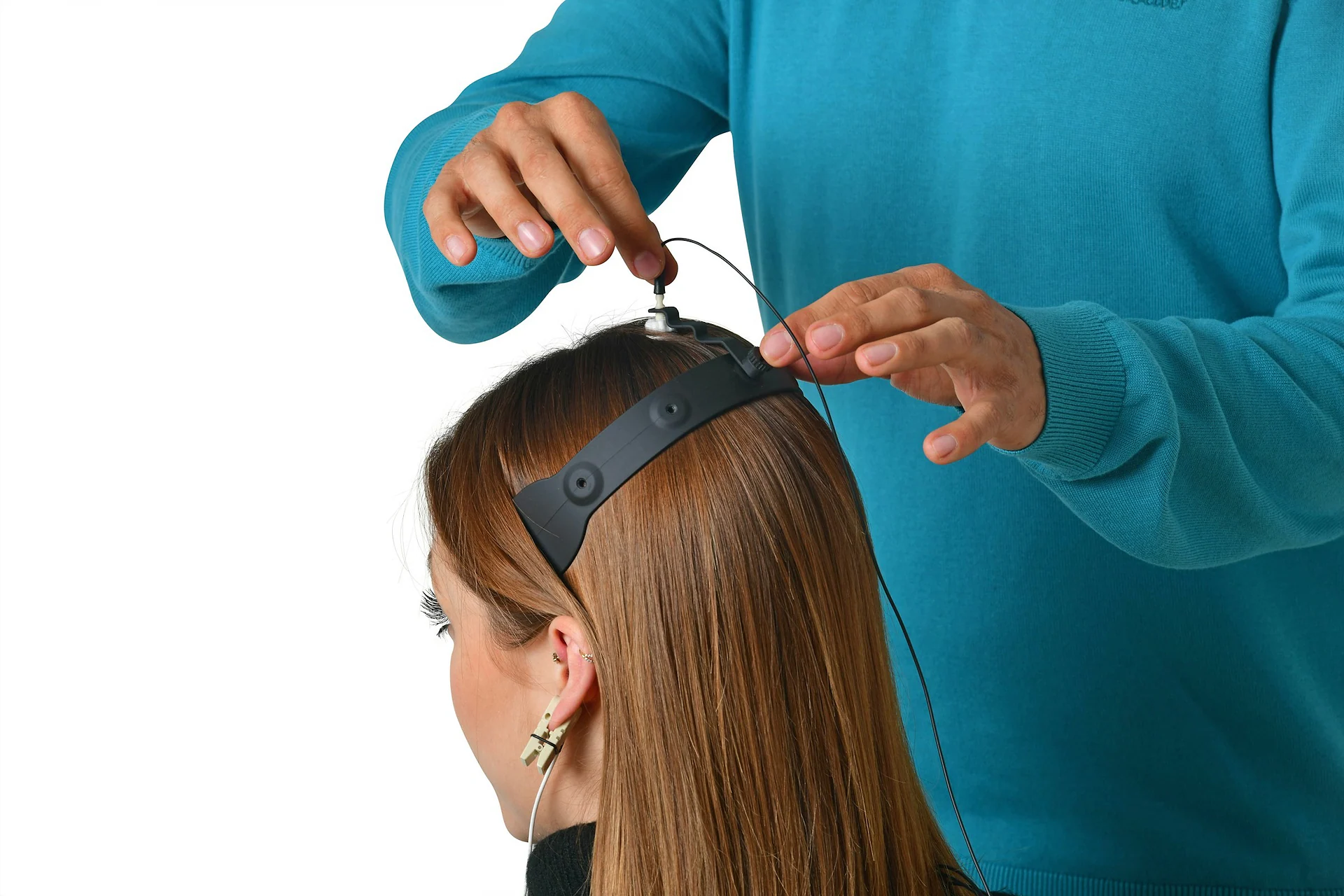
Electroencephalography (EEG) is a non-invasive, painless test that records the bioelectrical activity of the brain using electrodes placed on the scalp. It provides information about the functional state of the brain and its response to stimuli.
Brain cells communicate with each other through weak electrical signals. During the test, electrical activity from different points of the cerebral cortex is recorded simultaneously, amplified and displayed on a computer as waves. An EEG allows qualitative and quantitative analysis of the brain’s functional state. An EEG does not show the structure of the brain — MRI and CT are used for that; instead, an EEG shows “how the brain is working”.
Who is an EEG recommended for?
The most important use of EEG is in epilepsy: diagnosing epilepsy and determining the seizure type, choosing appropriate treatment, and assessing (together with the clinical picture) the decision to stop anti-seizure medication. EEG is also used to investigate a number of disorders originating in the brain. The doctor may order the test in the following situations.
- Seizures, loss of consciousness, unexplained episodes of “freezing”
- Distinguishing epileptic from non-epileptic seizures (for example, conversion disorder)
- The condition after traumatic brain injury
- Brain infections such as encephalitis and meningitis
- Seizures developing after a stroke
- Unexplained changes in consciousness and behaviour
- Suspected seizures in children with delayed speech development or developmental delay
- Certain sleep disorders
An EEG is not routinely needed for most complaints such as headache, dizziness or tiredness — the doctor decides whether the test is needed based on the nature of the symptoms.
How should I prepare for an EEG?
- Wash and dry your hair the day before or on the day of the test. Do not apply oil, gel, hairspray or cream to your hair.
- Remove braids, hairpins and hair accessories.
- Eat as usual — there is no need to fast; low blood sugar can affect the result.
- Do not stop the medicines you take; show the list of them to the doctor.
- If the doctor has ordered a sleep EEG, you may be advised to sleep less the night before. In that case, do not drive yourself to the test.
- If you are coming with a child, bring their favourite toy or book.
- If possible, bring videos of the seizures and previous EEG results.
How is an EEG carried out?
- The patient sits in a comfortable chair or lies down.
- A special cap that holds the electrodes at set points is placed on the head, or the electrodes are placed individually; a special gel is used to improve contact.
- The patient is asked to close their eyes and sit relaxed and still.
- Functional tests are carried out during the recording: opening and closing the eyes, breathing deeply and rapidly for a few minutes (hyperventilation), and looking at flashes of light at different frequencies (photic stimulation). These tests help reveal changes that are not visible at rest.
- After the recording, the electrodes are removed, gel residue is wiped off and the patient can return to their normal activities.
Other types of EEG
- Sleep EEG — some changes are only detected during sleep.
- Ambulatory EEG — recording with a portable device over one or more days in everyday conditions.
- Video-EEG monitoring — video recording at the same time as the EEG; the most informative method for clarifying the nature of seizures.
How long does it take, is it painful, are there any risks?
A standard EEG recording, including placing the electrodes, usually takes about half an hour to an hour; a sleep EEG and monitoring take longer. The test is safe and painless: the device does not send any current to the brain, it only records the brain’s own activity. The doctor will tell you in advance about rare restrictions (for example, an open wound on the scalp). In people with epilepsy, a seizure may occur during hyperventilation or light stimulation — because this happens under medical supervision it can even be useful for diagnosis, and the staff are prepared for such a situation.
How are EEG results interpreted?
The EEG recording is analysed by a neurologist-neurophysiologist: the frequency and symmetry of the background rhythm, the response to tests, and the presence and location of any epileptiform changes are assessed. Only the doctor interprets the result, together with the symptoms and examination findings.
- A normal EEG does not completely rule out epilepsy — brain activity may be normal between seizures. In such cases a repeat, sleep or long-term EEG is needed.
- Non-specific changes can also be found in healthy people and are not a diagnosis on their own.
- Epileptiform activity, when it matches the clinical symptoms, supports a diagnosis of epilepsy and helps determine the seizure type.
Frequently asked questions
Is an electric current applied during an EEG?
No. The electrodes only pick up the brain’s own electrical signals; no current is passed into the body.
Can children have an EEG?
Yes, an EEG is carried out safely at any age, including in babies. To keep the child calm, the test is sometimes scheduled for their sleep time.
Do I need to stop my medication before the test?
No, unless the doctor has given specific instructions, medicines are taken as usual. Stopping them on your own can cause seizures.
When will the result be ready?
Analysing the recording takes time; you will be told during the test when the result will be ready. The result should be discussed with the doctor.